Service · decanter, aeration, sediment
Should you decant the wine at a wedding?
Rarely, and almost never for everyone. A young Bordeaux benefits from being opened thirty minutes ahead, and a decanter helps if you have one. An old vintage is decanted little, or with great care. A magnum, yes, gladly. But at 150 guests, decanters become a major undertaking: here is what caterers actually do.
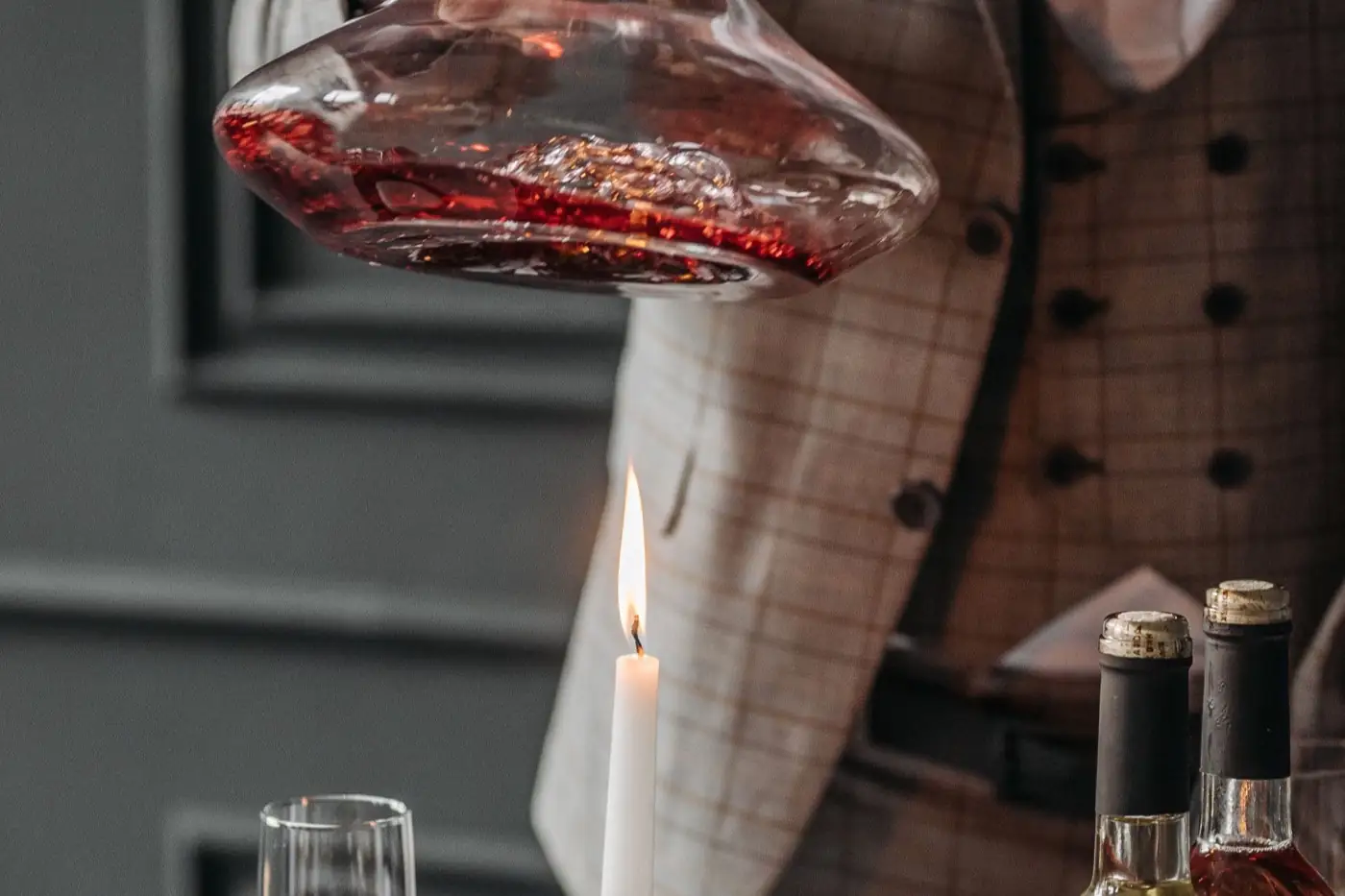
The table, wine by wine
Serving habits, not laws: two sommeliers won't decant the same wine the same way. For a wedding meal, with Bordeaux of the level served at receptions.
| Wine | Decant? | How long before | Why |
|---|---|---|---|
| Young red Bordeaux, 2 to 6 years | It helps | Opened 30 min before; in a decanter 30 min to 1 h | The tannins are tight, the fruit closed when opened. Air softens them. Without a decanter, uncorking in advance already does part of the job. |
| Red Bordeaux 8 to 15 years old | If needed | When opened, for the sediment | The wine is ready. You decant mainly to leave the sediment in the bottle, not to aerate it. |
| Old vintage, 20 years and over | No, or with care | Just before serving | An old wine opens up in a few minutes and can fade in half an hour. Bottle stood upright the day before, poured gently in front of a candle, served straight away. |
| Magnum of red | Yes | 30 min to 1 h | The wine develops more slowly in it, and is often more closed than a bottle of the same age. And the decanter on the top table makes an impression. |
| Dry white | Rarely | — | A young Pessac-Léognan white can open up in a decanter; at a reception, the main thing is to keep it cold. |
| Champagne | No | — | You lose the bubbles. Some sommeliers do it with very great champagnes; not for a toast for 150 people. |
| Sauternes | No | — | Chilled, poured directly. Dessert comes late; the wine needs no help. |
When a decanter is no use
- For a simple, fruity wine. An entry-level Bordeaux or a rosé gains nothing from it except washing-up.
- For the drinks reception. Standing, glass in hand, nobody notices thirty minutes of aeration.
- For a fragile old wine. Decanting oxidises it faster than it opens it up. Bottle upright, poured gently, that's all.
- If the wine sits in the decanter in the sun. A decanter warms up faster than a bottle: in a room at 24 °C, the red quickly goes above 20 °C.
At 150 guests, what caterers do
They uncork in advance. Thirty minutes to an hour before the course goes out, the red bottles are opened on a service table, cork laid beside them. It's poor man's aeration, but on a young Bordeaux it does most of the job, without a single decanter to wash.
They taste every bottle. A drop in a glass per bottle opened: a corked bottle spotted in the back room never reaches the dining room. In a hundred bottles, there are often one or two.
They keep decanters for a few tables. The top table, sometimes the parents' table, or the magnums if there are any. Fifteen tables of ten means at least fifteen decanters for a single round of red, to hire, fill, bring back and wash between courses. Few caterers offer it for the whole room, and those who do charge for it.
They choose a wine that doesn't need it. That is the real answer: a Bordeaux five to ten years old, ready to drink when opened, is served straight from the bottle. The which Bordeaux for a wedding page says which ones, and the vintages to drink in 2026 page which years are open today.
If your caterer doesn't know what to do with the wine you deliver, the wine for caterers page is written for them. For the volume, the wine for 150 guests page does the count.
How long before serving should you open a Bordeaux?
Thirty minutes for a young red, simply uncorked. An hour in a decanter if it is very young and powerful. A ten-year-old wine is opened when served. These are guidelines: the best thing is to taste a bottle when opened and half an hour later, the day before or at the menu tasting.
What is the difference between aerating and decanting?
Aerating means giving air to a young wine to soften it: you pour it in one go, generously. Decanting means separating an aged wine from its sediment: you pour it slowly and stop when the sediment reaches the neck. Same decanter, opposite movements. For a specific bottle, depending on its age and rank: aerating or decanting a fine wine.
Should you stand the bottles upright before the wedding?
For a wine over ten years old, yes: upright 24 to 48 hours before, the sediment falls to the bottom. For a young wine, it makes no difference. If the wine is delivered the day before, tell the caterer not to lay the old bottles down.
Who provides the decanters?
The caterer or the tableware hire company, rarely the venue. They are hired by the piece, with breakages charged. The serving temperature page gives the temperatures to aim for in a room at 24 °C: a full decanter placed on the table warms up faster there than a bottle.