Wine lovers · service · fine wines
Aerate or decant? What your bottle needs
Aerating means giving a young wine air in a carafe. Decanting means separating an old wine from its sediment. Some wines need neither, and a very old bottle can die of it. Enter the wine and its vintage: the tool tells you what to do, how long beforehand, and at what temperature to serve.
The right move for your bottle
For a bottle of Bordeaux kept in a cellar. The wine's age is read against its drinking window, calculated as in the tool when to open this bottle.
Two different moves
Aerating: giving a young wine air
A fine wine under ten years old is often closed: tight tannins, a quiet nose. Poured briskly into a wide carafe, it takes in oxygen and opens up in one to three hours.
Wide-bottomed carafe, quick pour, and taste every hour.
Decanting: removing an old wine's sediment
Over the years, a red leaves tannins and pigments at the bottom of the bottle. Decanting it means pouring it slowly to leave that sediment in the bottle, just before serving.
Narrow decanter, bottle standing upright since the day before, a light under the neck.
Decanting an old bottle, step by step
- 24 to 48 hours before, bring the bottle up from the cellar and stand it upright: the sediment slides to the bottom.
- Open without shaking. An old cork breaks or crumbles: a two-pronged cork puller (an “ah-so”) takes it out without piercing it. If it falls to pieces, filter through a fine sieve.
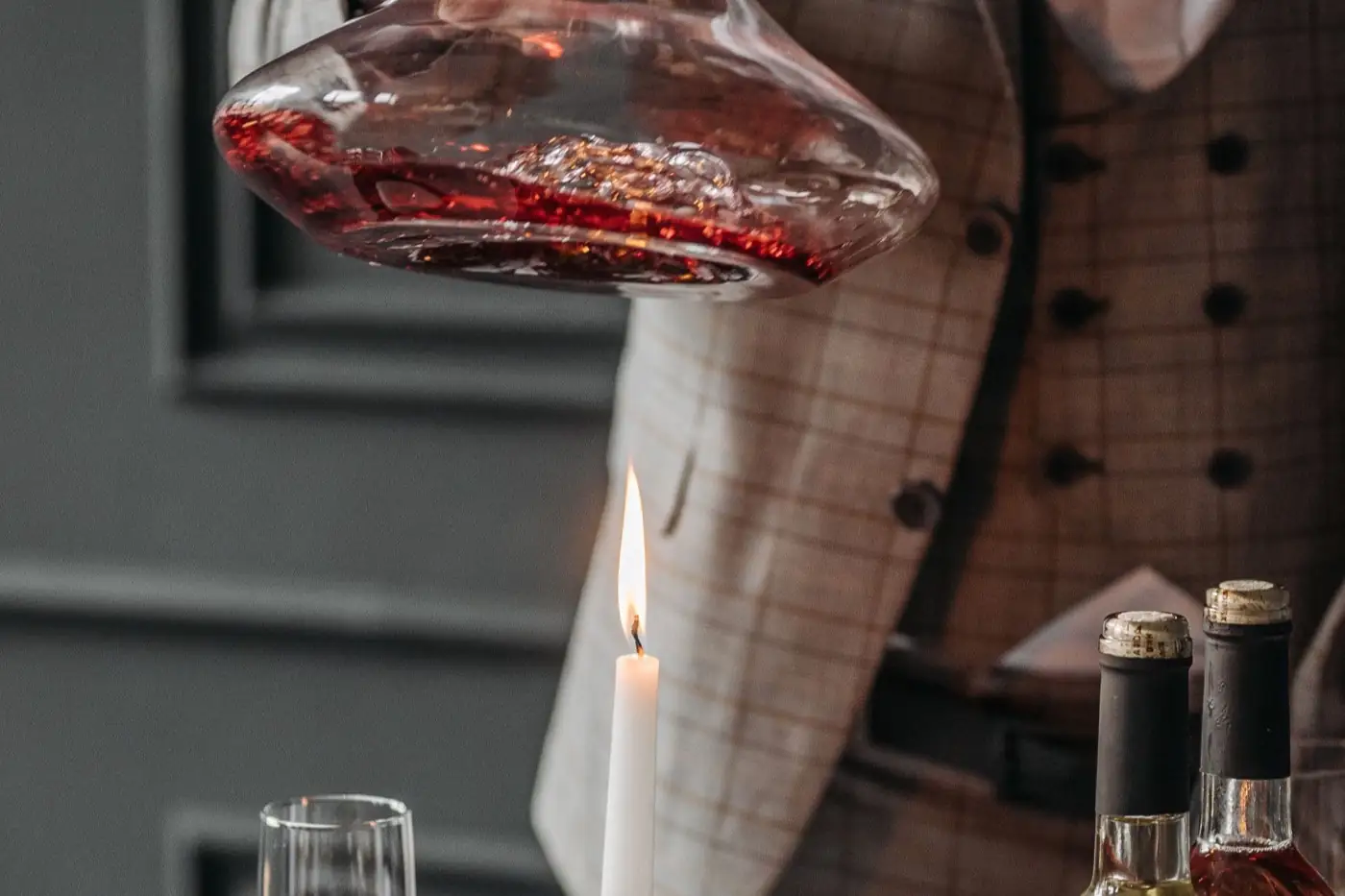
- Pour in one slow movement, the decanter tilted, a lamp or a candle under the neck of the bottle.
- Stop when the sediment reaches the shoulder. The last centimetre stays in the bottle.
- Serve straight away. A thirty-year-old wine can fade in the air within half an hour. Taste when you open it: if it is fragile, serve it straight from the bottle.
For a wedding or a meal for a hundred, the question is different: see should you decant the wine at a wedding. For serving temperatures, the serving page. Before opening an old bottle, a glance at its fill level tells you what to expect from it.
How long should you aerate a Bordeaux?
A young fine red, two to three hours; a wine that is opening up, one to two hours; a mature wine, half an hour or not at all. An old wine is decanted at the moment of serving, with no aeration time. A simple, ready-to-drink Bordeaux only needs opening half an hour before.
Should you aerate a white wine?
Rarely. A young, fine dry white from Pessac-Léognan gains from half an hour in a carafe, kept cool; other whites are served from the bottle. A Sauternes does not need a carafe.
Is it risky to put an old wine in a carafe?
Yes, if the aim is to aerate it. A wine over thirty years old has few reserves: an hour of air can wipe out what fruit it had left. Decant it at the last moment, only for the sediment, and drink it within the hour.
Can you aerate the day before?
No. Even a very young wine loses fruit after a night in a carafe. If you are short of time on the day, open the bottle in the morning and leave it upright, with the cork resting on the neck: the aeration will be slow but enough.
Should you put a magnum in a carafe?
Yes, more than a bottle of the same wine: it develops more slowly and stays younger at the same age. You need a carafe big enough for 1.5 litres, or two carafes.
For a dinner, a mature bottle is decanted and served the same evening. Ask for a selection of ready-to-drink wines, with prices, within 48 working hours.