Wedding · seated meal · bottles per table
How many bottles of wine per table?
At a table of ten, nine of them drinking, for a classic wedding meal: two white, three red, and two champagne at dessert. The seating plan changes the count, because half a bottle doesn't move from one table to the next. The calculation below starts from your tables, not from the total number of guests.
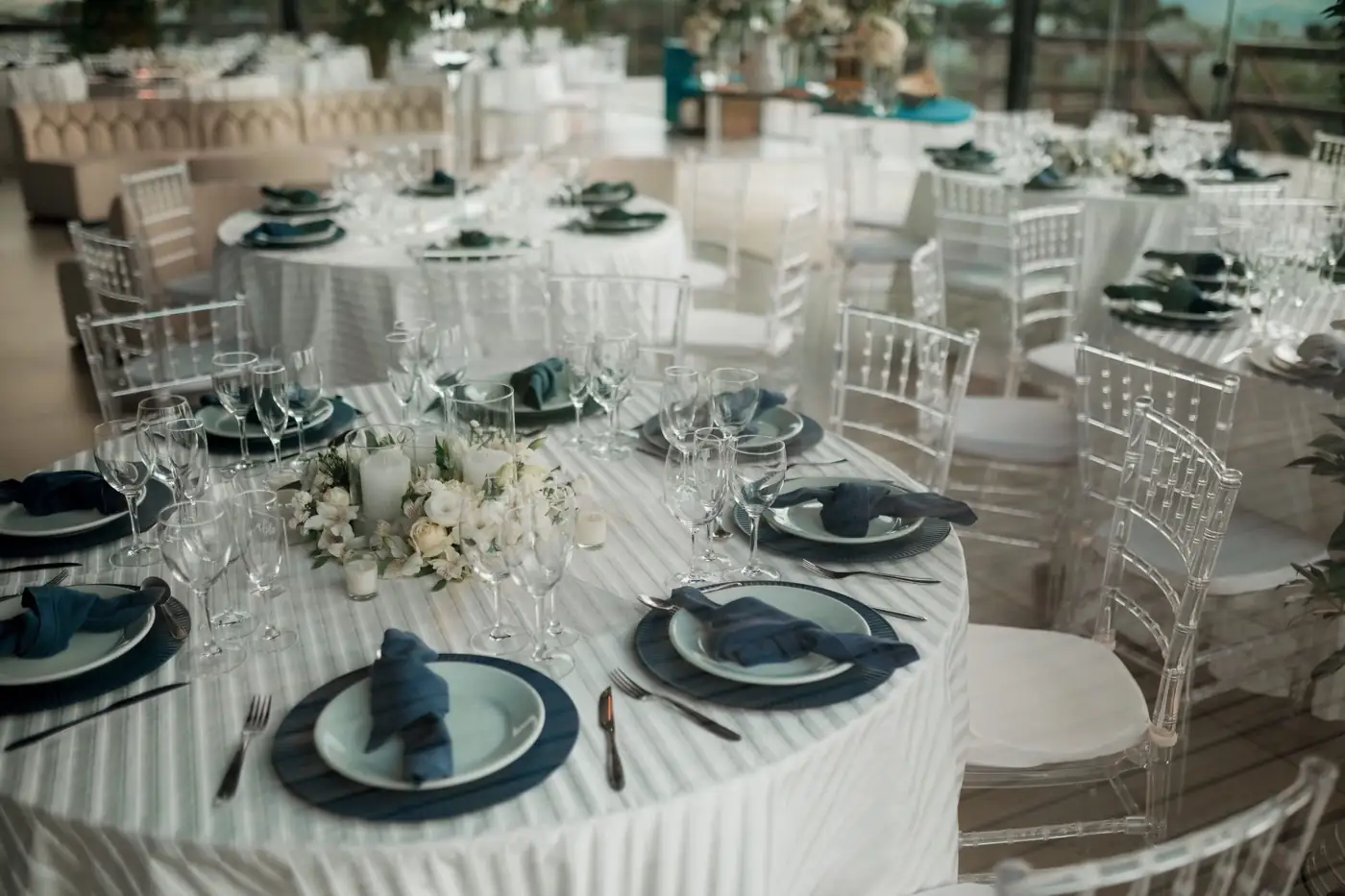
The count, table by table
Set for twelve tables of ten. The drinks reception (vin d'honneur) isn't counted here: it is drunk standing, before the seating plan.
Why count per table
The quantity calculator starts from the number of guests: three glasses per drinker for a meal, six glasses per bottle, and a 10% margin. That is right for the order. It doesn't tell you what goes on the tables.
At the table, each bottle is opened for ten people. A table that needs two and a half bottles of red opens three; the leftover half-bottle doesn't go to the next table. Added up over twelve tables, this rounding comes to at least the calculator's margin. If the wine is placed on the tables, don't add 10% on top: rounding per table is already your margin.
When a waiter goes round with the bottle, they fill glasses at several tables from the same one: you are back to the total number of guests, plus the margin. That is what the “service” setting does.
A magnum per table, or not
What it pours
Two glasses of red per drinker, with the main course and the cheese: one magnum is enough for six. At a table of ten, that is one magnum and one bottle, or two magnums.
What it costs
A magnum costs a little more than two bottles, and not every wine comes in one. The quote says which exist in magnum, and at what price.
What it adds
A magnum in the middle of each table shows up in the photos and is opened once. Beyond one per table, take the rest in bottles: the waiter replaces them faster.
For the white
A magnum of white takes twice as long to chill as a bottle. For white and champagne, stick to bottles, unless there is a cold room. The count is on the page chilling 50 bottles.
What the seating plan changes
- Children's tables don't count. Jugs of water, juice, and a bottle of soft drink: no wine on the table. Count them separately in the caterer's number of covers, not here.
- Tables of ten rather than eight. At eight, you open as many bottles as at ten: two white, three red, two champagne in both cases. Fewer tables, fewer opened bottles.
- The same wine at every table. A better wine at the top table gets noticed and talked about. If you want to mark out the couple's table, do it with a magnum of the same wine.
- Not every table drinks at the same pace. The table of thirty-year friends finishes its red before the great-uncles' table. It is up to the waiter to rebalance from the reserve, not up to the order.
- A reserve near the service area. Everything not placed at the start stays closed, cool, in cases. A closed bottle keeps; a bottle opened in advance is lost. The page what to do with leftover wine says what to do with the rest.
For the glasses to lay out and the number of waiters, see how many glasses per person. For the order of the wines during the meal, what order to serve wines in.
How many bottles of wine per table of 10?
For a classic wedding meal, white with the starter and red with the main course and cheese, with nine drinkers out of ten: two bottles of white and three of red. Add two bottles of champagne if a flute is served at dessert. Seven bottles per table.
And for a table of 8?
With seven drinkers: two white, three red, two champagne. As many as at a table of ten, because each table rounds up to the whole bottle. That is why tables of ten cost less in wine per guest.
Should you add a margin?
Not if the bottles are placed on the tables: rounding per table already makes the margin. If a waiter goes round with the bottle, yes: 10%, rounded up to full cases, like the quantity calculator. Unopened cases are not taken back, so the margin goes no further than that.
Is the drinks reception included?
No. The vin d'honneur, the drinks reception, is drunk standing, before sitting down to eat: two glasses in the first hour, mostly champagne and white. It is calculated on the drinks reception page, and added to this count. The wedding meal page does both together, and the evening dance that follows is counted on the open bar page.