Pairing · sushi, Japanese food
What wine goes with sushi?
A dry white, young, unoaked, or sparkling. And, to be honest, often nothing at all: sake, green tea or a Japanese beer go with sushi as well as any wine. If you want wine, an Entre-deux-Mers or a dry white Bordeaux one to three years old, between €7 and €12, is the safest Bordeaux answer. The selector builds the meal; the page then says what to avoid and how much to plan for a sushi reception.
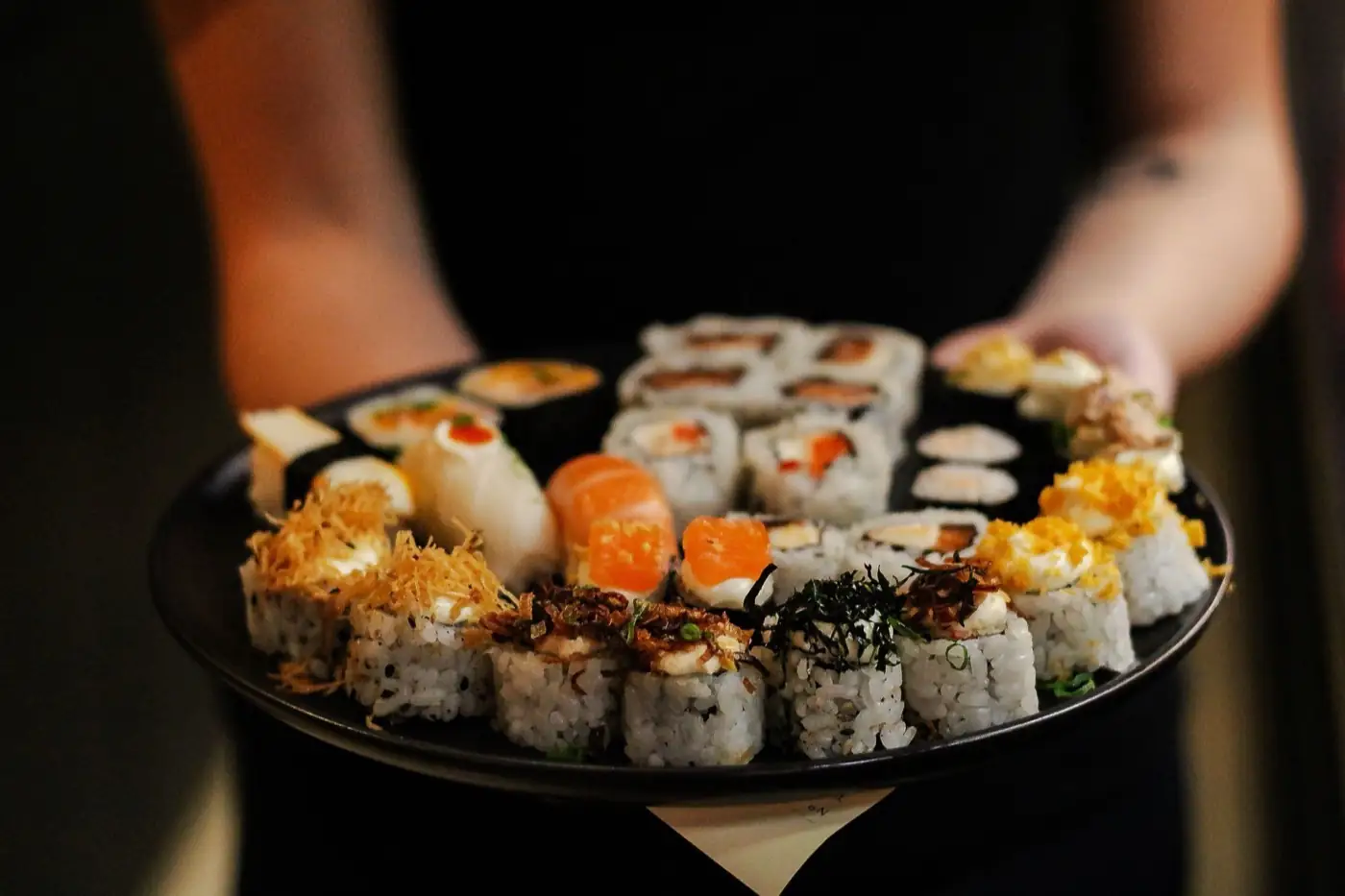
Build the meal around the sushi
The sushi is preset as the main course, with a salad to start, no cheese and a fruit dessert. The balance shown is about 86% white and 14% sparkling, with no red. Change each line: the appellation, age and price follow, with no château named.
Three choices that work
Entre-deux-Mers, dry white Bordeaux
Sauvignon and sémillon, one to three years old, at 8 °C. The acidity answers the vinegar in the rice, the freshness the raw fish, and the lack of oak leaves the taste of the fish intact. From €7 to €12.
Sparkling, brut
Brut champagne, or a crémant on request, gets on with almost the whole platter, tempura included: the bubbles cut through the fat and the salt. It's also the simplest choice for a reception where nobody sits down to eat.
Sake, green tea, beer
A chilled sake, an unsweetened green tea or a light lager are the pairings of Japanese cuisine itself. For a dinner for eight, it's often the best choice, and it isn't our trade.
What doesn't work, and why
Tannic red is the classic mistake. Tannins meeting the oils of raw fish and soy sauce leave an unpleasant metallic taste that everyone notices without knowing where it comes from. Even a good red Bordeaux suffers. If someone absolutely insists on red, a chilled clairet or a dry rosé works with salmon and tuna, never with white fish. Full-bodied oaked whites, which are wonderful with fish in a sauce, are too heavy here: keep them for the meal described on the what wine with fish page.
Second point: wasabi and pickled ginger. They flatten any wine: the heat accentuates the alcohol, the sugar in the ginger makes a dry white taste sour. Nothing can be done about it, except serving the wine between mouthfuls rather than with them. That is why sake, less acidic and rounder, remains the reference pairing. Sake isn't our trade, and we don't claim a Bordeaux does better; we only say that, if it's wine, it's a young dry white.
How many bottles for a sushi reception
Sushi is often eaten at a corporate drinks reception or a standing reception, with other drinks on the table: tea, beer, sparkling water. Allow one bottle for three guests over two hours, two thirds dry white, one third sparkling.
| Format | Guests | Dry white | Sparkling | Note |
|---|---|---|---|---|
| Dinner with friends | 8 | 2 to 3 | 0 to 1 | Local wine shop, or sake and tea: you don't need us. |
| Corporate drinks reception | 50 | 12 | 6 | Three cases, with beer and soft drinks alongside. |
| Reception | 100 | 24 | 12 | Six cases. The white goes in the cold the day before, not that morning. |
Rounded up to the case of 6, 8% margin for a standing event. For sparkling, the number of bottles per guest is set out on the page how many bottles of champagne for 20, 50 or 100 guests.
When a wine merchant is useful, and when it isn't
For a sushi dinner at home, three bottles of white and some tea are enough: your local wine shop will do that very well, and closer to home. The page wine merchant, wine shop, supermarket or producer explains where the line is. We become useful when the volume goes up: a corporate drinks reception with a Japanese caterer, a reception for 100, a restaurant looking for a consistent dry white by the glass. In those cases, an Entre-deux-Mers that is the same from one delivery to the next and the champagne on the same quote make things simpler.
For a French-style menu where sushi is only a starter, the selector on the food and wine pairing page builds the rest of the meal. For oysters and seafood, close to sushi in their freshness, see what wine with seafood.
What white wine goes with sushi?
A dry white, young and unoaked: Entre-deux-Mers or a dry white Bordeaux one to three years old, mostly sauvignon, served at 8 °C. Allow €7 to €12 a bottle. Avoid full-bodied, oaked whites, too heavy for raw fish.
Can you drink red wine with sushi?
Rarely with any success. Tannins, with the oils of the fish and soy sauce, leave a metallic taste. A dry rosé or a chilled clairet works with salmon and tuna; a red for laying down does not.
Champagne or white wine with sushi?
Both work. Brut champagne copes better with a mixed platter and tempura, and suits a standing reception; dry white costs less and goes very well with a sit-down meal. Many receptions serve a flute on arrival, then the white.
Are sake, tea or beer better choices?
Often, yes, and we'd rather say so. Sake is the pairing of Japanese cuisine, green tea rinses the palate without flattening anything, a light lager goes well with tempura and maki. Dry white wine is an alternative, not an obligation.