Pairings · fish
What wine goes with fish?
Sea bass, sole, salmon or monkfish: fish calls for a dry white, and Bordeaux makes very good ones that get forgotten behind its reds. Pessac-Léognan and Graves for a wedding dish, Entre-deux-Mers for the budget. The sauce decides the wine more than the fish itself. And a fish menu changes the quantities: white goes from a third to half of the bottles. The calculator puts fish into your menu; the page explains the rest.
Fish in your menu
The main course is preset to fish. Look at the share of white shown: that is the figure to carry over into the quantity calculator.
The sauce chooses the wine
Steamed, grilled, with lemon
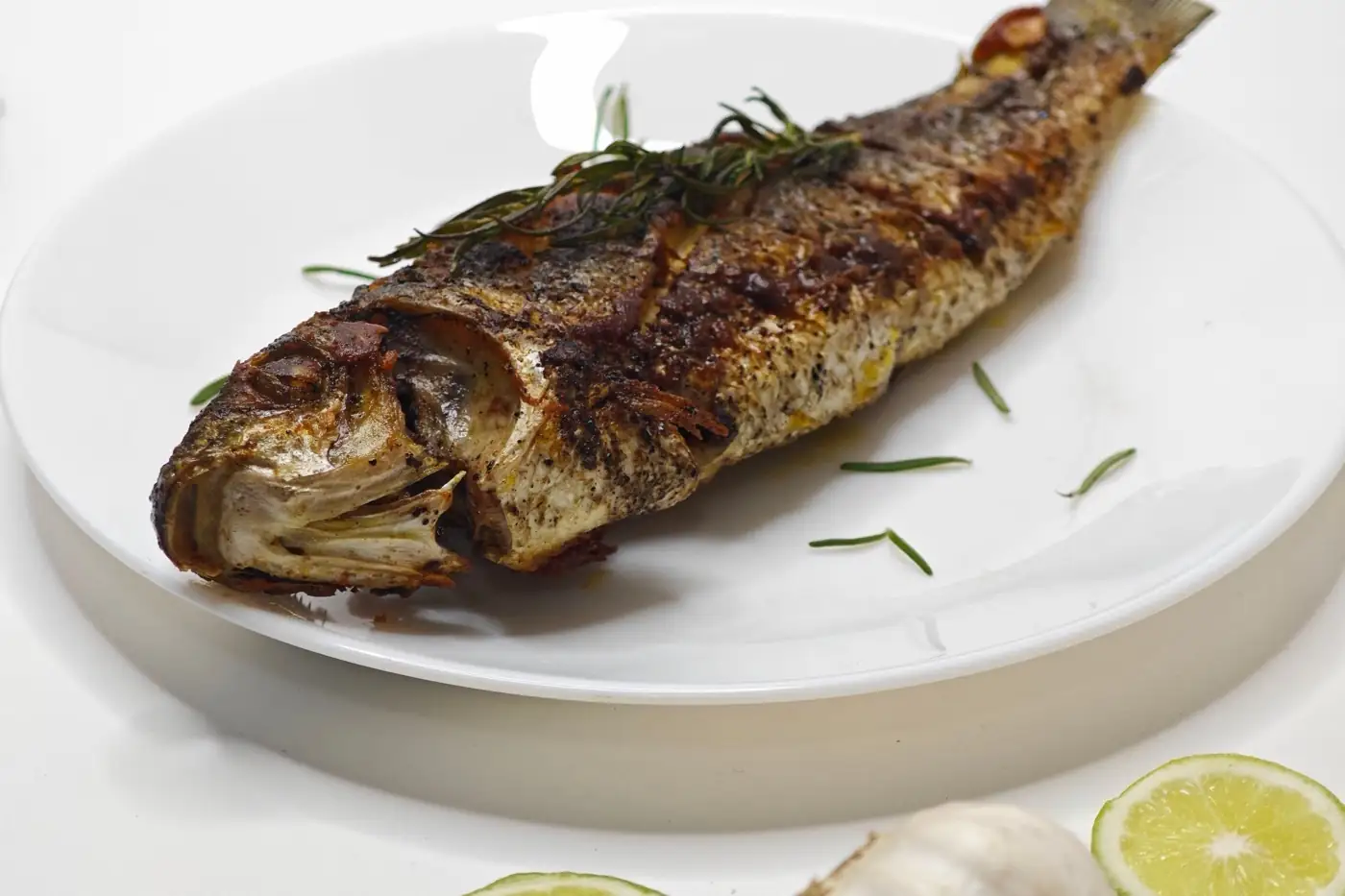
Grilled sea bass or sea bream, a steamed fillet, a squeeze of lemon: the dish is lively and light. A young dry white, Sauvignon-led, at 9 °C. This is where Entre-deux-Mers does as well as pricier wines.
Sole meunière, beurre blanc, cream sauce
Butter and cream call for a richer, barrel-aged white: a white Pessac-Léognan or Graves with a few years on it. This is the wedding dish, and it is where white Bordeaux shows what it can do.
Salmon, monkfish, tuna
Firm, oily flesh. A full white Graves works; a light, young red, served cool at 14 °C, works too. It is the only fish where red is not a mistake.
Fish in tomato sauce, Provençal style
Acidity and herbs: a simple white or a Bordeaux rosé. No oaky wine, it would fight the tomato.
The Bordeaux whites people forget
Bordeaux makes one dry white for every ten bottles, which is why nobody thinks of it. Yet Pessac-Léognan makes barrel-aged Sauvignon and Sémillon whites that age for ten years and stand up to great fish dishes. Graves, just to the south, offers the same style for less. Entre-deux-Mers, between the Garonne and the Dordogne, gives crisp, simple whites that do the job with grilled fish and with oysters, which the seafood page covers in detail.
Serve the white cold but not icy: 8 to 10 °C for an Entre-deux-Mers, 10 to 12 °C for a barrel-aged Pessac-Léognan, which loses its aromas straight out of the ice bucket. At a table in June, one bucket per table and bottles swapped every twenty minutes.
A fish menu changes the quantities
The quantity calculator counts one third white for a seated meal, because it assumes a meat main course. With fish as the main, the starter and the main are both drunk with white, and only the cheese brings back a little red. The table gives the split for 100 guests; the calculator then lets you set the share of each colour.
| Menu | White | Red | For 100 guests |
|---|---|---|---|
| Meat main course | 35% | 65% | 18 white, 30 red |
| Fish main course, cheese | 55% | 45% | 27 white, 21 red |
| Fish main course, no cheese | 80% | 20% | 36 white, 12 red |
A light red with the cheese is enough; do not order a ten-year-old Médoc for a cheese board that follows a sole.
What white wine goes with fish?
A dry white Bordeaux: a young Entre-deux-Mers with grilled or steamed fish, a white Pessac-Léognan or Graves with a few years on it for fish in a butter or cream sauce. The sauce decides the wine more than the species.
Can you drink red with fish?
With salmon, monkfish or tuna, yes: a young, light red served cool at 14 °C. With sole or sea bass, no, the tannin gives the fish a metallic taste. When in doubt, a full-bodied white suits the whole table.
What wine with fish as a wedding main course?
A white Pessac-Léognan three to six years old, or a white Graves to keep to budget. Plan for half the meal's bottles to be white instead of a third; the pairing guide puts together the full menu.
What temperature for a white with fish?
8 to 10 °C for a young, crisp white, 10 to 12 °C for a barrel-aged white, which loses its aromas if too cold. A tub of ice and water twenty minutes before serving is enough; a home fridge needs three hours.