Food and wine · cheese
Which wine with cheese?
Cheese is the course people get wrong most often, because they keep the red from the main course out of habit. A mixed cheeseboard takes a mature red or a full-bodied white; goat's cheese wants a dry white; a blue calls for a Sauternes. The calculator below places the cheese within a full menu; the page then says what to serve, how much for 200 guests, and why you don't change glasses.
The cheese in your menu
The default menu is a classic wedding menu. Switch the cheese between cheeseboard, goat's cheese and blue: the wine line-up and the share of white move with it.
Cheeseboard, goat's cheese, blue: three cheeses, three wines
The mixed cheeseboard
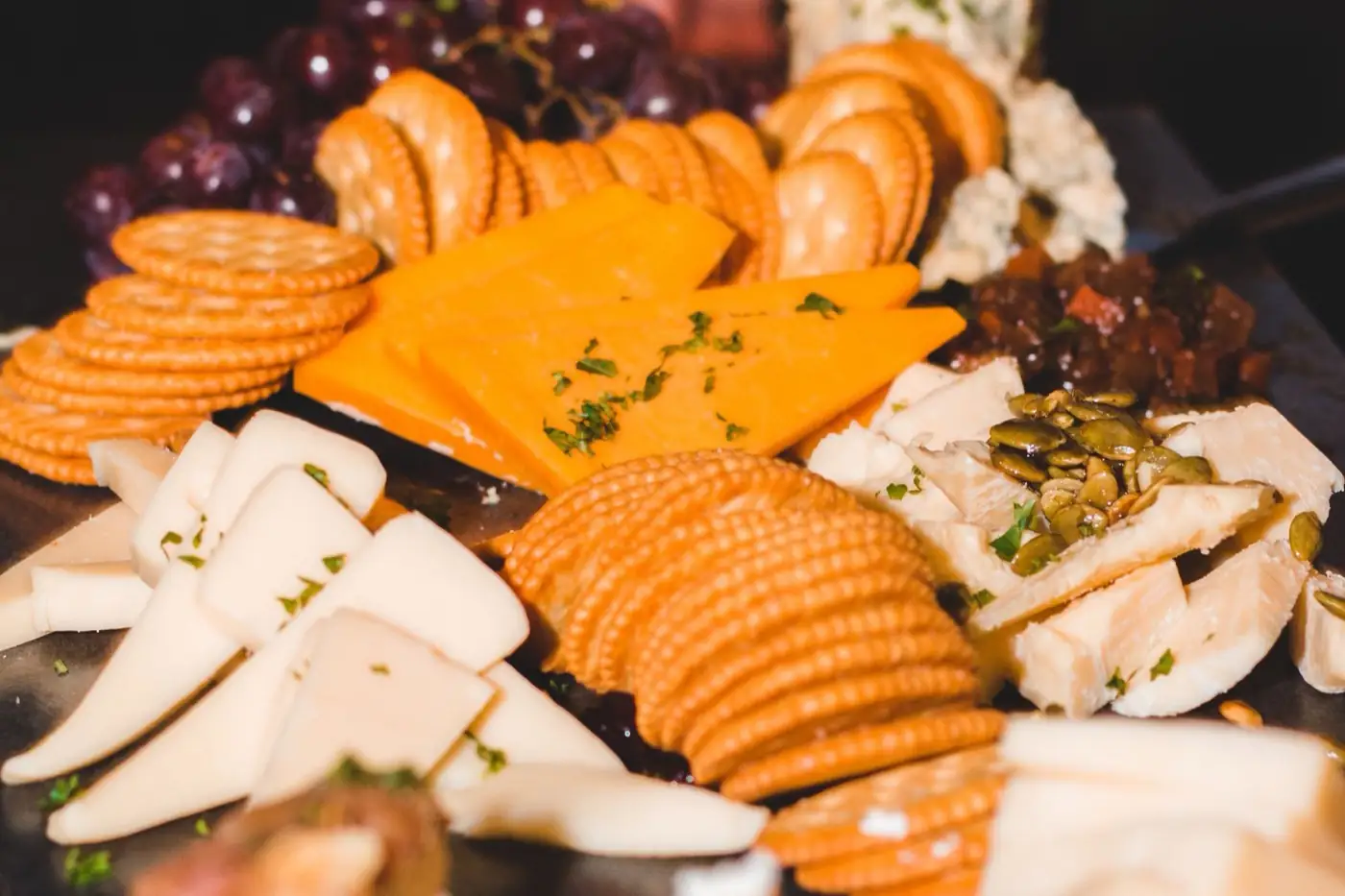
Soft cheese, hard cheese, a goat's cheese, sometimes a blue: a cheeseboard can't be matched precisely. A red that has lost its tannins, a ten-year-old Médoc or Saint-Émilion, works with almost everything. A full-bodied white Pessac-Léognan does just as well, and makes a pleasant surprise.
Goat's cheese
Acidic and salty, goat's cheese crushes reds and gets on with crisp whites. An Entre-deux-Mers or a sauvignon-based white Bordeaux, chilled: it is the only truly safe match of this course.
Blue cheese, Roquefort
Salt and sugar: Bordeaux's oldest pairing. A half-bottle of Sauternes or Loupiac, well chilled, served in small liqueur glasses. A small quantity, a big effect; the same wine carries on with the dessert.
Why you don't change glasses
At a wedding of 200, the cheese course comes late, the room is noisy and the staff are tired. Changing glasses at that point means 200 more glasses to hire, wash and break, for a course that lasts twenty minutes. Caterers' practice is simple: the red from the main course carries on with the cheeseboard, and the wine only changes if the menu really demands it, goat's cheese alone or a blue in the spotlight. If you want to make a point of it, do it with a white served in the white-wine glass from the starter, which the staff kept on the table for that purpose.
So the right question isn't “which wine with cheese” but “which main-course red will last until the cheese”. A mature red, ten years old, tannins softened, gets there effortlessly; a young, oaky red seems harsh with a soft cheese. That is one more reason to put the budget into the red for the meal rather than the one for the evening: the page wedding meal wine explains that split.
How many bottles for the cheese course
One glass per drinker, rarely more: the cheese comes after two glasses of red with the main course. One bottle per eight guests is the rule; the menu calculator counts the cheese at half the weight of the main course.
| Meal | Guests | With the cheese | Note |
|---|---|---|---|
| Family dinner | 12 | 1 to 2 bottles | The main-course red is enough. A half-bottle of Sauternes if there is a blue. |
| Wedding meal | 100 | 12 to 14 | Two cases of the main-course red, kept back for this course. Or two cases of white if the cheeseboard is fresh cheeses. |
| Large wedding | 200 | 24 to 30 | Four to five cases. Include them in the order for the main-course red rather than separately: same wine, same temperature, one less service. |
Which wine with a mixed cheeseboard?
A mature red, a Médoc or Saint-Émilion eight to fifteen years old, whose tannins have softened and which works with soft and hard cheeses alike. A full-bodied white Pessac-Léognan is the modern alternative, and often the best on a board where goat's cheese dominates.
Red or white with cheese?
White wins more often than people think: goat's cheese, brie and comté get on better with a dry or full-bodied white than with a young red. Red stays the norm at reception meals because it is already on the table; if it is ten years old, it does the job very well. For a raclette or a fondue, the page which wine with raclette says frankly what Bordeaux can do, and what it can't.
Which wine with Roquefort and blue cheeses?
A Sauternes or a Loupiac, chilled, in half-bottles: the sugar in the wine answers the salt in the cheese, the classic Bordeaux pairing. A half-bottle serves eight guests in liqueur glasses, and the same wine carries on with the dessert, as the page dessert and wedding cake explains.
Should you change glasses for the cheese?
No, unless the wine changes colour. The main-course red carries on in the same glass; a white with the cheese is served in the starter glass kept on the table. Changing 200 glasses for twenty minutes of service costs hire, breakages and time that nobody notices. The food and wine pairing guide puts the cheese back into the full wine line-up of the menu.