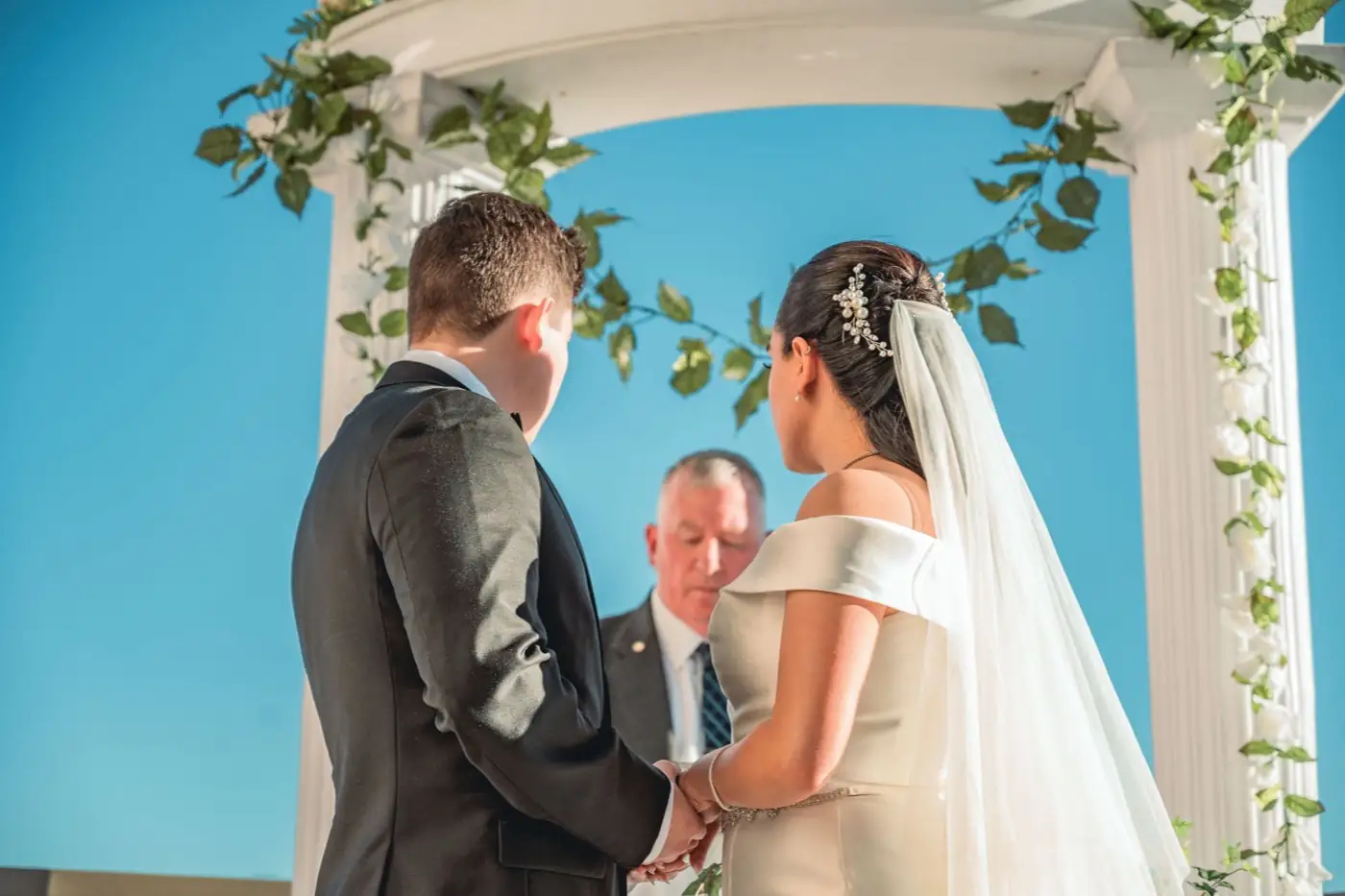
Wedding · outdoors, at an estate, in a marquee
Wine for an outdoor country or estate wedding: the heat changes everything
A wedding outdoors, in June, with no kitchen and no fridge, is not bought like a wedding in a venue. Rosé and white go up, the red is served cool, magnums replace bottles on the long tables and the bag-in-box keeps the bar going. The calculator below is set for 150 guests; the rest of the page says what the setting demands.
The calculation for 150 guests
A two-hour drinks reception, a seated dinner, a three-hour evening party, 80% drinkers. The basic calculation; the “outdoor” adjustments are below.
What being outdoors changes in the calculation
For 150 guests and 120 drinkers. The calculator shows 192 bottles in four colours; here is how a country wedding redistributes them.
| Item | Indoors | Outdoors, in summer | Why |
|---|---|---|---|
| Rosé | 36 | 48 to 54 | It is hot, people drink chilled. Rosé replaces some of the red at the meal and some of the sparkling in the evening. |
| White | 48 | 48 | Steady. It is already served chilled and already there at the reception and with the starter. |
| Red | 48 | 36 to 42 | Goes down. A young Médoc served at 14 °C works; a heavy red at 25 °C is undrinkable. |
| Sparkling | 60 | 54 to 60 | Steady or slightly down: an outdoor evening drinks water and rosé after midnight. |
| Water | 0.5 L / person | 1 L / person | The item people forget. On every table, and at the bar, before the wine. |
Chilling, without a kitchen
This is the number one problem at a country wedding, before quantities. A hundred bottles of white, rosé and sparkling at 8 °C in a field in June need either the caterer's cold room the day before, or tubs of iced water, salt and plenty of ice. A domestic fridge won't be enough: it chills air, not wine. The chilling 50 bottles fast page works out the tubs, the kilos of ice and the time for your number. With no caterer or estate, in your own garden: wedding at home.
- The day before: everything drunk chilled goes into a cold room at the caterer's or the estate, if the venue has one. Ask when you sign.
- In the morning: two 100-litre tubs per service point, half ice, half water, a handful of coarse salt. Twenty minutes per batch of 24 bottles.
- The red: in the shade, never in the car, thirty minutes in a tub before serving to bring it down to 14–16 °C.
- The evening: a tub kept topped up at the bar. A bottle taken out of the cold at 8 pm is lukewarm by 10 pm.
Magnums or bottles on the tables at a country wedding?
Magnums on tables of ten or twelve: one opening, a bottle that gets noticed, a wine that stays cooler for longer because there is twice as much liquid for the same surface of glass. Allow one magnum for six guests at the meal. On small tables and at the bar, the standard bottle. The bag-in-box or bottle comparison prices the three formats for your volume.
Does bag-in-box have a place at a wedding?
At the bar, yes; on the table, no. For the evening of an outdoor wedding, one bag-in-box of rosé and one of white behind the bar pour quickly, stay cool in a cool box, and cost a quarter less. Nobody sees the container. On the dinner tables, the bottle and its label are part of the meal.
How many bottles for 150 guests outdoors?
Around 190 with margin and rounding, or 32 cases, for a full day. That is the threshold where delivery goes by pallet and where you need two service points. The detailed calculation by moment is on the wedding wine page; this one adds the redistribution of colours and the chilling.
Does the estate impose its own wine?
Often, or it charges corkage if you bring your own. Read the contract before ordering: some venues sell their own wine, others work with a supplier, others leave you free for a fee per bottle opened. The wine for venues and estates page explains how venues organise themselves, and so what you can negotiate.
Quantities, formats and delivery to the estate on a single quote: quote request, reply within 48 working hours.