Pairing · foie gras
What wine goes with foie gras?
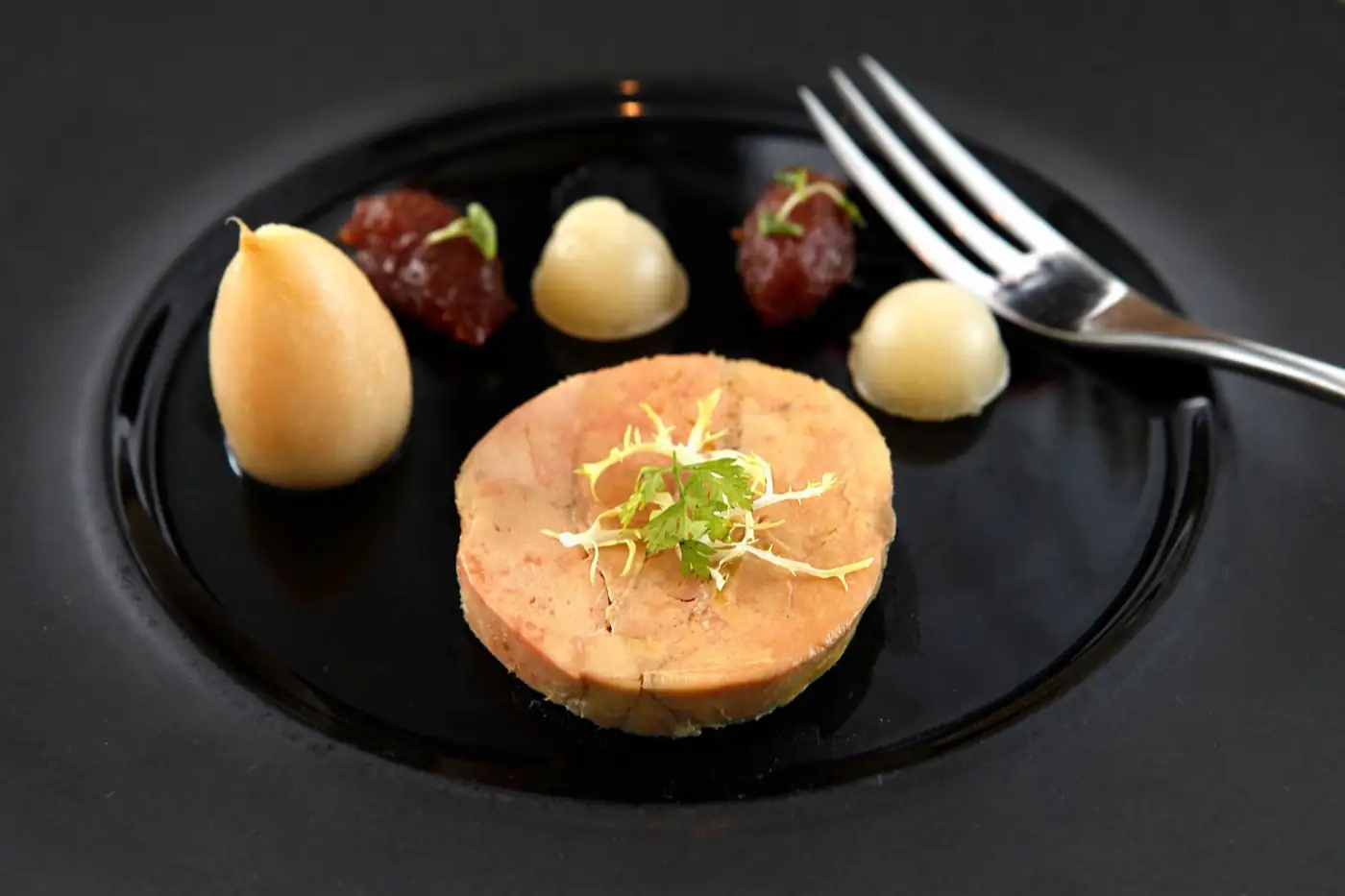
A sweet Bordeaux in half bottles: Sauternes, Loupiac or Sainte-Croix-du-Mont, in small pours, one half bottle for eight guests. Or, if the meal goes on for a long time, a dry white Pessac-Léognan that doesn't tire the palate. The selector below puts foie gras as the starter and builds the rest.
Build the menu around the foie gras
Foie gras is preset as the starter. Change the main course, the cheese and the dessert: each line gives a family of appellations, a colour, an age and a price range, with no brand names.
Sweet or dry: the two answers
Sauternes, Barsac
Sugar, acidity, botrytis. The richness of the liver and the sugar in the wine answer each other. A 37.5 cl half bottle pours eight 5 cl glasses, and 5 cl is enough. €15 to €30 a half bottle for a good growth, much more for the top classified ones.
Loupiac, Sainte-Croix-du-Mont, Cadillac
On the other bank of the Garonne, the same grape varieties, the same botrytis, half the price. €8 to €15 a half bottle. For a wedding starter for 100 guests, nobody can tell the difference.
White Pessac-Léognan
A rich, barrel-aged dry white stands up to foie gras without leaving the mouth sweet before the main course. It is the choice of restaurants and six-course meals. €25 to €45.
The half bottle, and why so little
A sweet wine is served at 5 or 6 cl, in a small glass, just once. A 75 cl bottle therefore gives twelve to fifteen glasses, and a half bottle seven to eight. Since the foie gras comes once and the next course changes wine, the half bottle is the right format: nothing stays open. Allow one half bottle for eight guests, a full bottle for fifteen.
| Guests | Half bottles (37.5 cl) | Or bottles (75 cl) |
|---|---|---|
| 12 | 2 | 1 |
| 40 | 6 | 3 |
| 100 | 13, rounded to 14 | 7 |
| 200 | 26, rounded to 30 | 14 |
10% margin included. Serve at 8 °C, opened at the last moment. An opened half bottle keeps for a week in the fridge: sweet wine is forgiving.
The Christmas question
Foie gras opens Christmas dinner in half of French families, and the wine question comes back every December. For twelve at the table, two half bottles of Loupiac or one of Sauternes are enough; the rest of the meal is covered on the what wine with the Christmas menu page, and the quantities for the whole evening on wine for a family Christmas. At that volume, let's be clear: your local wine shop is perfectly suited. A wine merchant becomes useful when the family numbers thirty or when you are looking for a particular vintage.
Foie gras as a wedding starter
For 100 guests, 14 half bottles of sweet wine, two and a half cases, between €150 and €350 depending on the appellation. It is the cheapest item of the meal and the one people remember most: sweet wine surprises, people talk about it. Two precautions. Serve it on its own, without the dry white that would habitually go with it; a guest doesn't drink two wines with one starter. And follow it with a red that has body: a Saint-Émilion or a Médoc after the sugar, not a light red that would seem thin. The full menu is built on the food and wine pairing for a wedding menu page.
What wine should you serve with foie gras?
A sweet Bordeaux, Sauternes or Loupiac, served cool in a small glass, one half bottle for eight guests. Or a dry white Pessac-Léognan if the meal is long and you don't want to start with sugar.
Sauternes or Loupiac: what is the difference?
The same grape varieties, Sémillon and Sauvignon, the same noble rot, two banks of the Garonne. Sauternes is more concentrated, longer, and costs twice as much. For a foie gras starter for 100 people, Loupiac does the job and leaves €150 for the main-course red.
Can you serve champagne with foie gras?
Yes, a brut or demi-sec champagne works well, and it is practical when the sparkling from the drinks reception is still open. The sweetness of foie gras makes a brut seem a little hard; a demi-sec or a softer crémant de Bordeaux is gentler. Crémant is possible on request.
And red with foie gras?
A tannic red crushes foie gras. If you are set on red, take it old and supple, a ten-year-old Pomerol or Saint-Émilion, and serve it with pan-fried foie gras rather than a terrine. With a cold terrine, sweet wine remains the right answer.