Pairings · beef
What wine with beef?
Rib of beef, beef Wellington, Sunday roast or tartare: beef is the easiest dish to pair, and that is exactly why people get it wrong. It takes a delicate Margaux as well as a massive Saint-Estèphe, a three-year-old cru bourgeois as well as a fifteen-year-old classified growth. What decides is the cooking and the sauce. The calculator below places the beef in your menu; the page says what to choose, at what age, and for which table.
Beef in your menu
The main course is preset to beef. Change the other courses to read the full wine line-up.
Four preparations, four wines
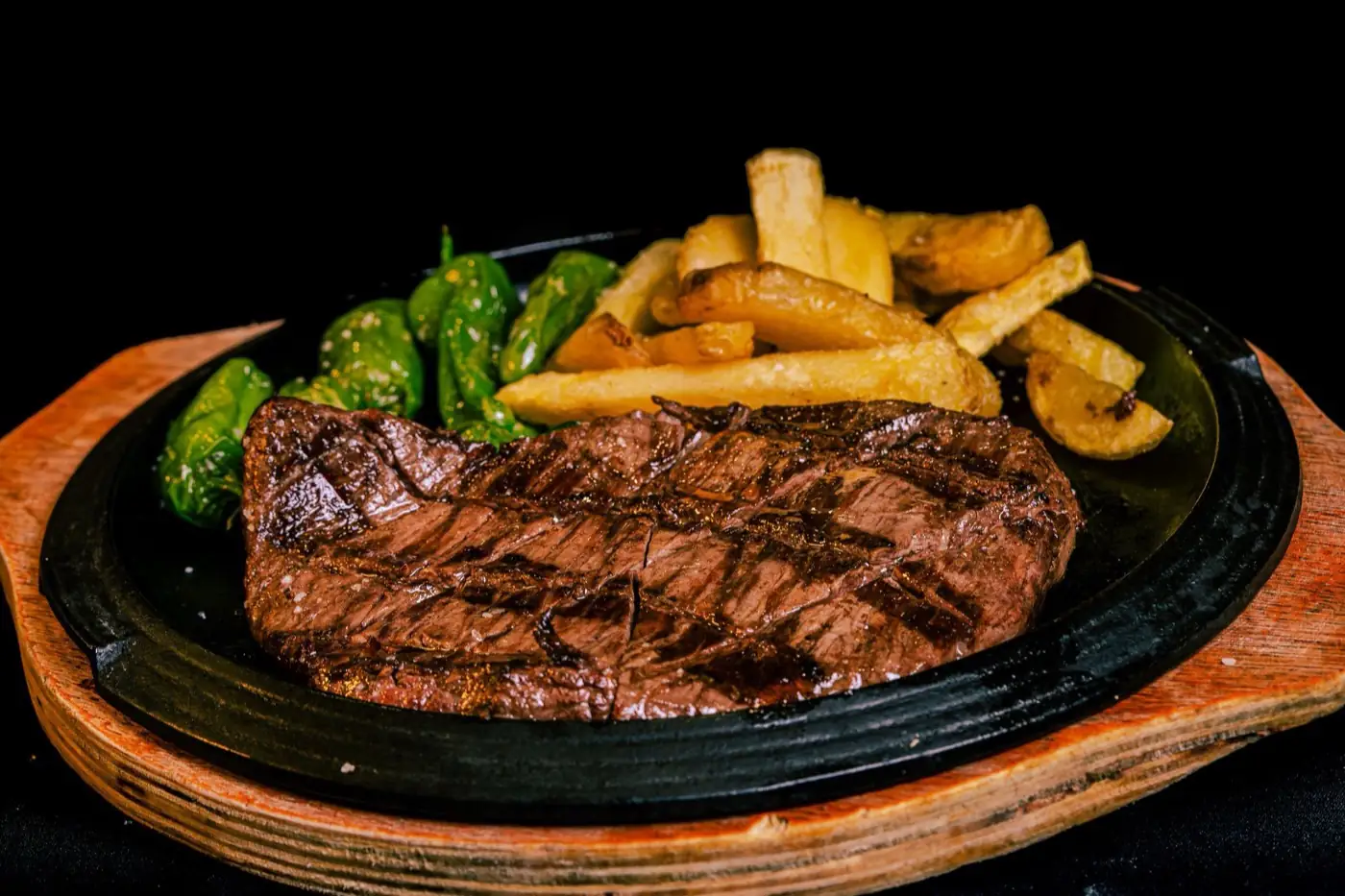
Grilled rib of beef
Charred crust, rare centre, marbled fat: the cut calls for a dense wine. A Saint-Estèphe or Pauillac with some age stands up to the meat without getting lost.
Beef Wellington
Tender meat, puff pastry, often a duxelles: a wedding dish. A Margaux, finer and more fragrant, matches the delicacy of the fillet. It is the pairing where you can put the finest wine of the day.
Roast, bourguignon, daube
Long cooking or plenty of juices: the meat has melted, so the wine can be simpler and younger. A Médoc cru bourgeois or a well-made Bordeaux Supérieur is more than enough.
Tartare, carpaccio
Raw meat, oil, lemon or capers: the tannin of an old wine would be too much. A young, fruity red, served cool at 15 °C, or even a clairet.
Why beef forgives almost everything
The protein and fat in beef absorb tannin, and grilled meat brings smoky notes that Cabernet Sauvignon knows well. That is why the Médoc built its reputation at this table. A young wine seems more supple with a rib of beef than on its own in the glass; an old wine finds a dish that doesn't overwhelm it. The only real mismatch is old wine with raw meat, and wine that is too light with meat grilled over a wood fire.
The age rule fits in one line: the shorter the cooking and the fattier the cut, the older and more powerful the wine can be; the longer the cooking, or if the meat is raw, the younger and simpler the wine can be.
Gala dinner, seated meal: the quantities
With a beef main course, allow two glasses per drinker, three at a dinner that runs long. A 200-person gala dinner gets through 60 to 70 bottles of red on the main course alone, and this, not the bar, is where a great wine is justified. The pairing guide puts the beef back in the full menu and gives the share of white to plan for the starter.
| Meal | Guests | Red with the main | The right level |
|---|---|---|---|
| Dinner with friends | 8 | 3 bottles | A rib of beef, a ten-year-old Saint-Estèphe: this is the moment to open the special bottle. |
| Wedding meal | 100 | 30 to 36 | Margaux or cru bourgeois depending on budget; beef Wellington deserves the step up. |
| Gala dinner | 200 | 60 to 72 | Two wines are possible: a cru bourgeois for general service, a few magnums of classified growth for the top table. |
For a restaurant: red by the glass with meat
A steakhouse or brasserie serving beef sells red by the glass first, and the right wine by the glass with meat is not the most prestigious one: it is the one that stays good two days after opening and leaves a margin. A three- to five-year-old cru bourgeois, bought by the case, does this job better than a classified growth. The wine for restaurants and by-the-glass mark-up pages cover trade pricing, samples and the margin calculation per bottle opened.
What wine with a rib of beef?
A dense Médoc with some age: Saint-Estèphe or Pauillac, six to twelve years old. Grilled, fatty meat absorbs the tannin and shows off a powerful wine that would taste hard on its own in the glass.
What wine with beef Wellington?
A Margaux five to ten years old, finer than a Pauillac, to go with the tenderness of the fillet and the pastry. It is the wedding dish on which you put the best wine of the day.
What wine with beef tartare?
A young, fruity red, served cool at around 15 °C, or a clairet de Bordeaux. Raw meat and acidic seasoning don't like the tannins of an old wine.
Beef or lamb: the same wine?
Almost, but lamb calls for more mellow tannin, so more age, and rules out the young reds that suit beef. The lamb page explains what the fat of the meat changes.